Backward Design is a planning framework that flips traditional instructional design by starting with the end in mind. Instead of beginning with activities or content, instructors first identify the desired learning outcomes, then determine acceptable evidence of learning, and finally plan the instructional experiences that will lead to those outcomes. This approach, popularized by Wiggins and McTighe in Understanding by Design (opens in a new tab), ensures that teaching is purposeful and aligned, helping students achieve deeper, more lasting understanding.
How Backward Design Works
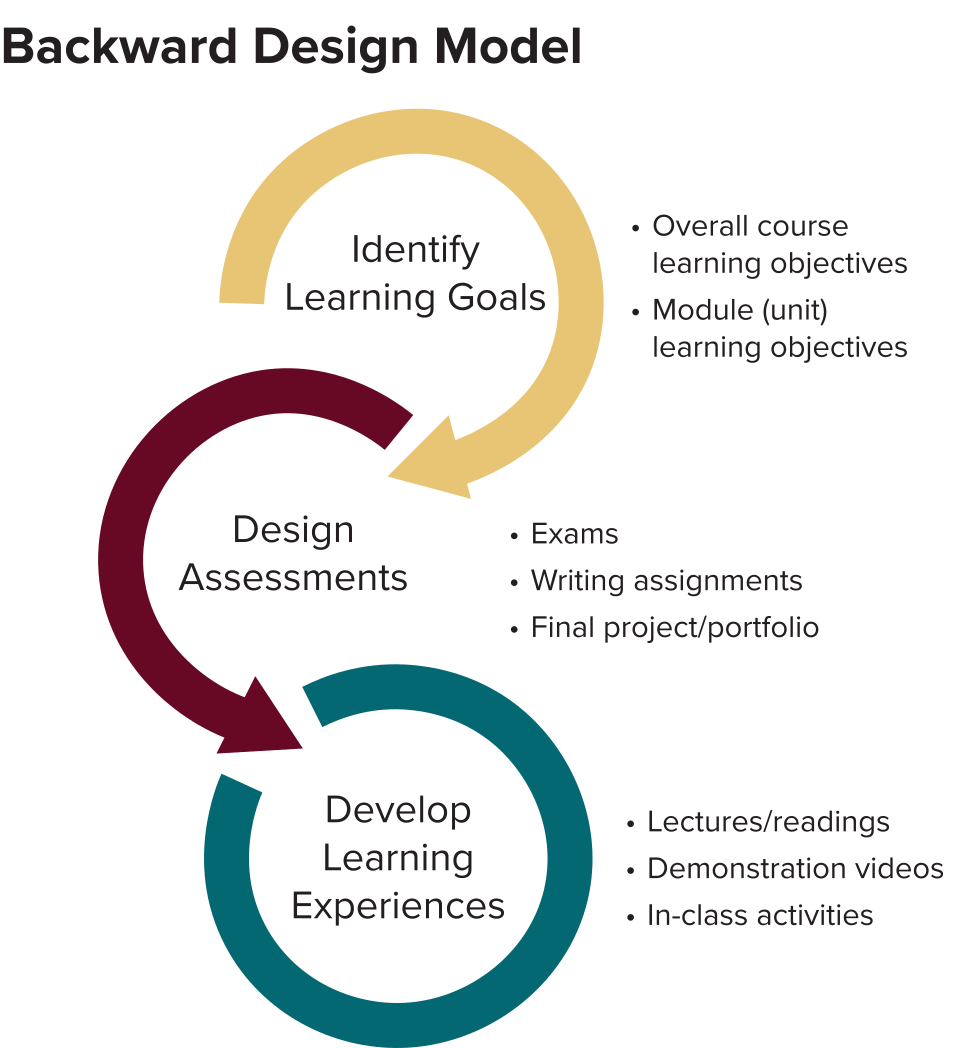
As shown in Fig. 1, the Backward Design Model approaches instructional design by working backward from the destination of the learning journey you will take students through in your course. Backward Design begins with identifying the learning goals for your course. In this first phase of the approach, you will focus on what you want your students to take with them out of your course to identify course learning objectives at both overall and modular or unit levels. Now that you have in mind the learning goals you want your students to achieve, you will proceed to the next phase of creating assessments that are designed from the start to demonstrate that learning goals are being met. This produces plans for exams, writing assignments, a final project/portfolio, etc. that are authentic and meaningful to your students. Those plans are taken naturally into the the final phase of Backward Design, development of learning experiences. You will craft and/or choose in-class activities, demonstration videos, lectures and readings, etc. that will prepare your students to do well on the assessments you have planned.
Backward Design and the Teaching Toolkit
The first three modules of the Teaching Toolkit have been designed around the three core stages of Understanding by Design: identifying desired results, determining acceptable evidence, and planning learning experiences. Each section of the site offers curated resources, practical strategies, and examples tailored to help faculty thoughtfully design courses that align learning goals with assessments and instruction.
Citations and Further Reading
- Backward Design: The Basics (opens in a new tab) by Cult of Pedagogy.
- Handelsman, Jo, Sarah Miller, and Christine Pfund. Scientific teaching. Macmillan, 2007.
- Wiggins GP, McTighe J. Understanding by Design. Expanded 2nd ed. Association for Supervision and Curriculum Development; 2005. (available with online access at WSU libraries)